
Easter in Slovenia: Meaning, Traditions, and Easter-Related Surnames
Introduction
Easter is one of the most important holidays in Slovenia, combining religious meaning, family traditions, and rich symbolism. Alongside well-known customs such as the blessing of food, decorated eggs, and the Easter breakfast, the holiday has also left subtle traces in places we might not expect—Slovenian surnames. Many of these reflect everyday life, the church calendar, or the symbolic world of our ancestors. In this article, we explore how Easter influenced the formation of certain surnames and what they reveal about Slovenia’s past.
The Meaning of Easter in the Slovenian Context
Easter commemorates the resurrection of Jesus Christ and represents the peak of the liturgical year. Historically, it played a central role in the lives of people living in what is now Slovenia, closely tied to the rhythm of nature, the arrival of spring, and the idea of renewal.
During the time of the Habsburg Monarchy, Easter holidays were also socially regulated—work was restricted, and attending church services was generally expected. This importance of the holiday was deeply reflected in language and naming practices.
Traditional Easter Customs
Blessing of Easter Food
On Holy Saturday, families traditionally brought baskets of food to church for blessing. These typically included:
- ham or smoked meat
- horseradish
- decorated eggs
- potica (traditional nut roll)
Each item carried symbolic meaning, and the custom was widespread across Slovenian regions.
Easter Eggs and Symbolism
Decorated eggs (known as pirhi) symbolize life and rebirth. Traditional techniques such as wax decoration or scratching patterns into dyed shells reflect a rich folk heritage.
Easter Breakfast
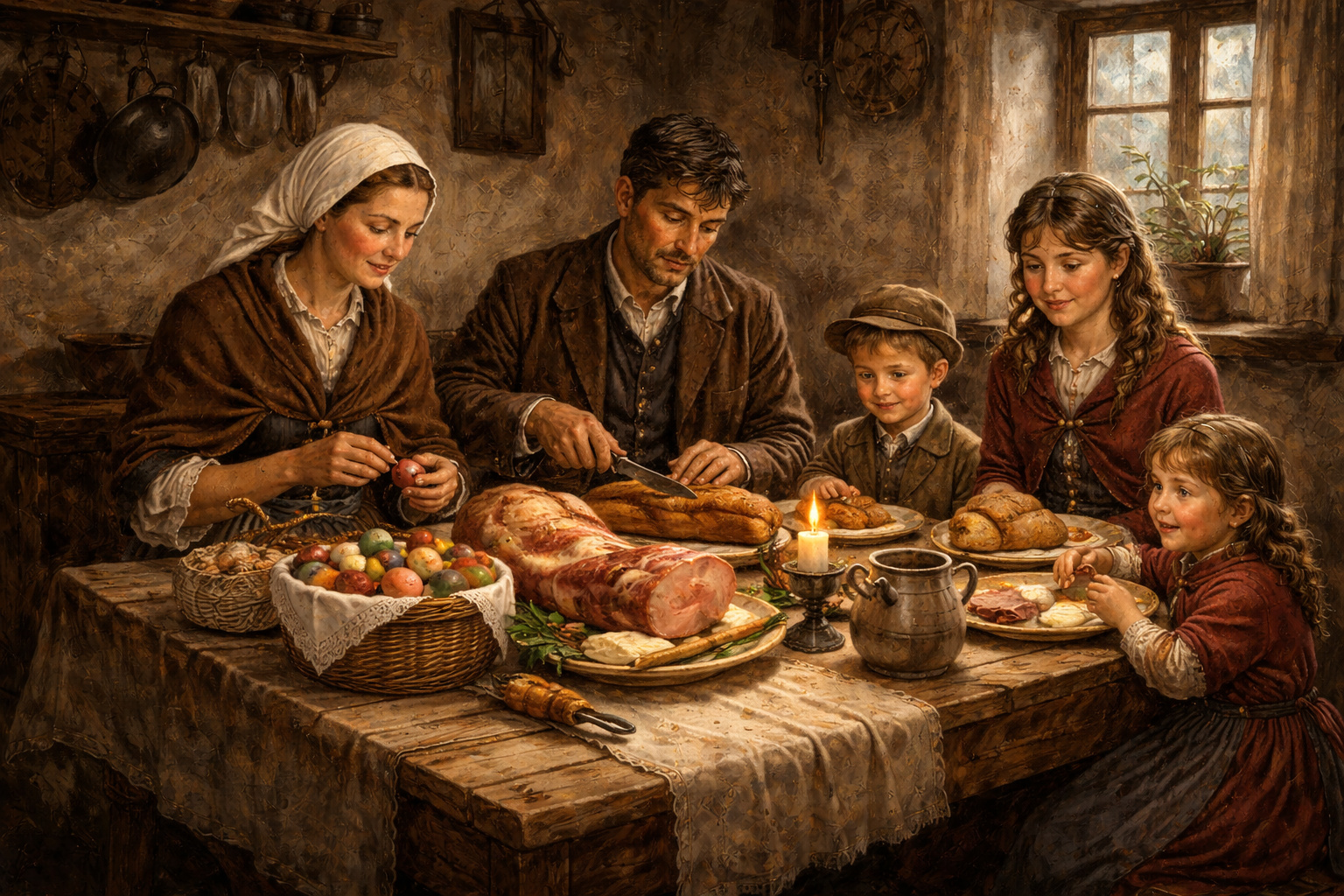
Easter Sunday traditionally began with a shared family breakfast, where blessed foods were eaten together. This ritual held strong symbolic value and reinforced family bonds.
Easter-Related Surnames in Slovenia
Slovenian surnames mostly became fixed between the 16th and 19th centuries. They originated from occupations, locations, personal traits—and also from religious and festive contexts. Easter, as a central event in the church calendar, naturally influenced naming practices.
Surnames connected to Easter can originate from:
- festive foods (e.g., Hren, Kruh, Hlebec, Klobasa)
- days in the liturgical calendar (Petek – Friday, Pondelek – Monday)
- religious roles and terms (Škof – Bishop, Papež – Pope, Kaplan – Chaplain, Duhovnik – Priest)
- symbols and motifs (Pirh – Easter egg, Križ – Cross, Zajc – Hare)
It is important to note that these surnames do not necessarily originate directly from Easter itself, but rather from the broader cultural and religious environment.
Some Easter-related surnames are far more common than one might expect. For example, Zajc (hare), often associated with spring symbolism, is among the most frequent surnames in Slovenia. Similarly, Hren (horseradish), a key element of the Easter meal, is relatively widespread.
Surnames such as Škof (Bishop) and Papež (Pope) show how deeply church terminology became embedded in everyday life. Others, like Pirh, Kruh (bread), and Hlebec (loaf), reflect the importance of food and abundance in both daily and festive contexts.
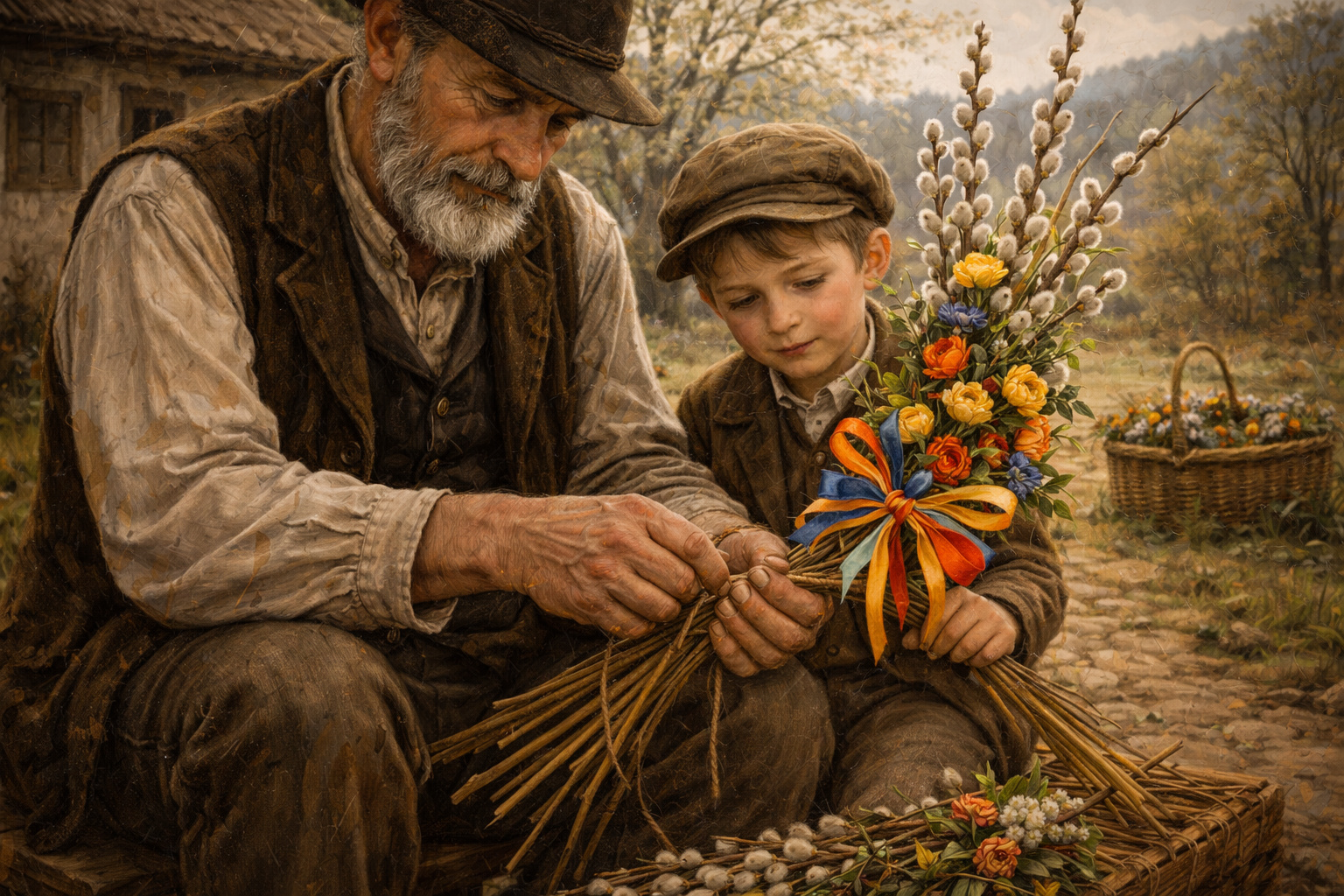
An interesting example is Butara, referring to the bundle carried on Palm Sunday, which connects directly to the beginning of the Easter season.
Regional Patterns
The distribution of these surnames is not uniform across Slovenia. Certain surnames appear more frequently in specific regions, reflecting historical settlement patterns, dialects, and local traditions.
For example:
- southeastern Slovenia stands out with surnames like Pirh and Hlebec
- central Slovenia shows higher frequencies of Zajc, Škof, and Duhovnik
- Gorenjska region includes rarer surnames such as Šunkar
These regional patterns often indicate long-term family presence in particular areas.
Conclusion
In Slovenia, Easter is not only preserved through traditions and customs but also through language—and even surnames. These names offer a fascinating glimpse into how religion, daily life, and cultural symbolism shaped the identity of past generations.
What may seem like ordinary surnames today often carry subtle traces of history. Especially during Easter, these connections become more visible, reminding us that heritage is present not only in archives and traditions, but also in the names we carry.