
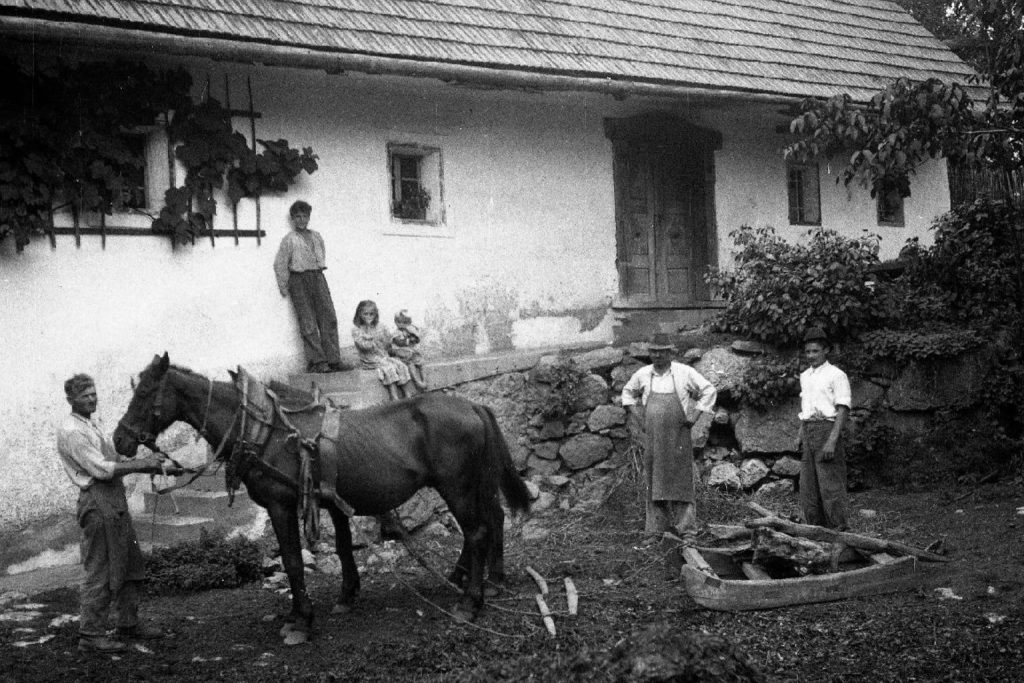
House Names in Slovenia: The Hidden Key to Finding the Right Homestead and the Right Family
When researching Slovenian ancestors, researchers often encounter confusion: the same person appears under slightly different names, surnames seem to change, and an additional term appears alongside the name—especially in the case of women—that is neither a maiden name nor a nickname in the modern sense. In many cases, the explanation is simple: it is a house name.
House names are one of the most fascinating and, at the same time, most useful aspects of Slovenian genealogy. They are not only part of linguistic and cultural heritage, but they also play a very practical role in identifying the correct homestead, the correct family, and in properly interpreting historical records. The Slovenian Register of Intangible Cultural Heritage defines them as proper names of houses and their associated property, inhabitants, and shared structures, often remaining unchanged even when ownership or surnames change.
What Are House Names and Why Did They Develop
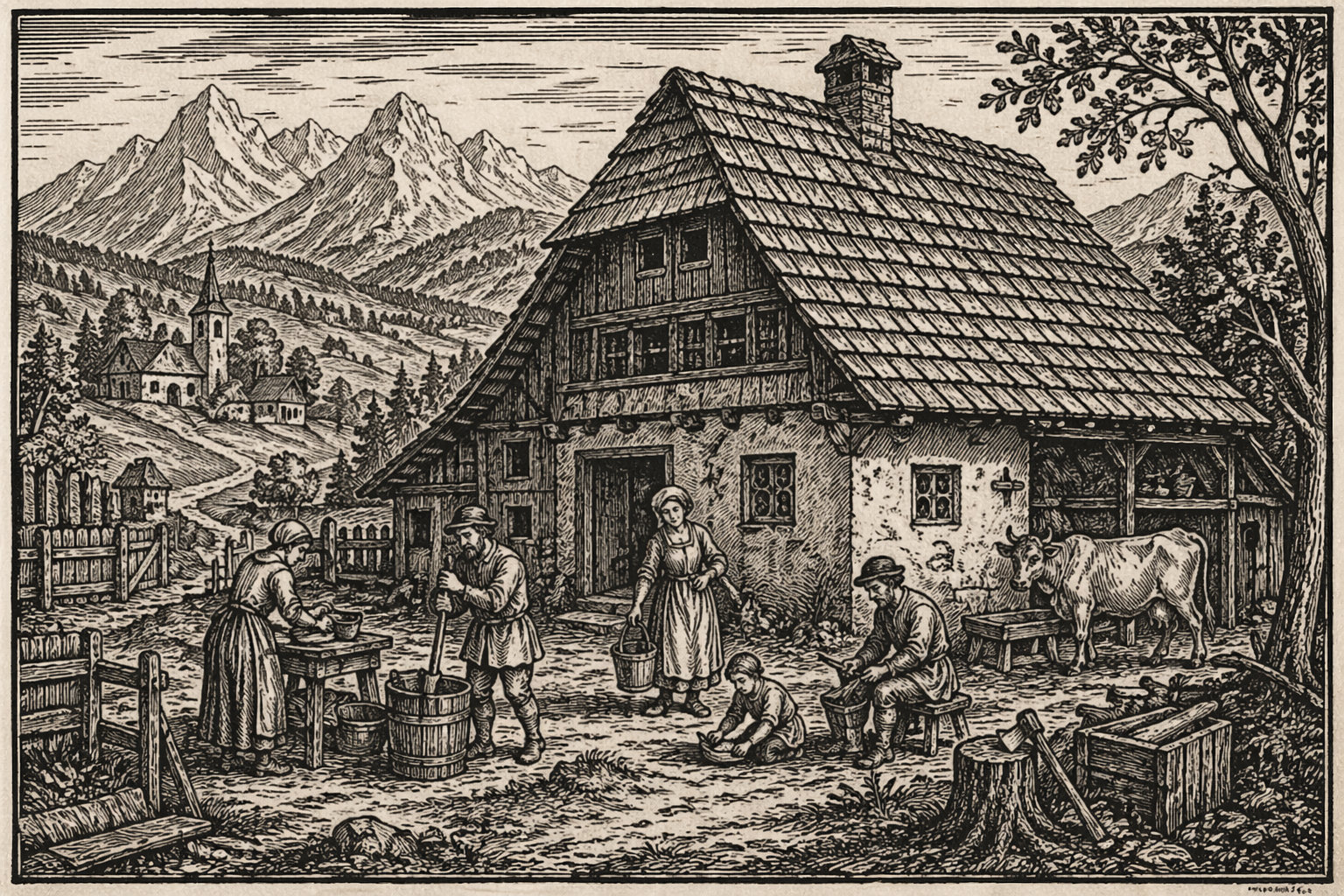
A house name is the name of a homestead. In a local context, it often refers not only to the building itself, but also to the people living there and the land associated with it. For this reason, in many villages, the house name was often more important in everyday use than the surname.
The Slovenian heritage register emphasizes that a house name typically “sticks to the house,” even when owners and surnames change, and that it may follow an individual throughout their life.
It is difficult to determine exactly when house names originated, but scholars believe many developed very early, out of the need to distinguish between people and properties more precisely. They were formed from personal names of early owners, surnames, location, occupation, social status, physical characteristics, or features of the surrounding landscape, plants, or animals.
Where House Names Appear in Historical Records
For genealogists, it is crucial to understand that house names are not only part of oral tradition—they also appear in written historical sources.
They are recorded in: parish records, especially Status animarum, where they appear under the term “nomen vulgare”, cadastral records, particularly the Franciscan Cadastre, where they are often marked as “vulgo”.
These records systematically include house names alongside personal names, making them an essential tool for identifying individuals.
For researchers, this is extremely important. A house name is often the key to placing a person in the correct homestead. Even more: in my own work, house names are often an element of trust. When I first contact a family or property owner as part of an ancestral guided tour, knowing the house name is often crucial. The owner immediately senses that I am not speaking in general terms, but that I know exactly which house and which family I am referring to.
House Names Were Not Only a Rural Phenomenon
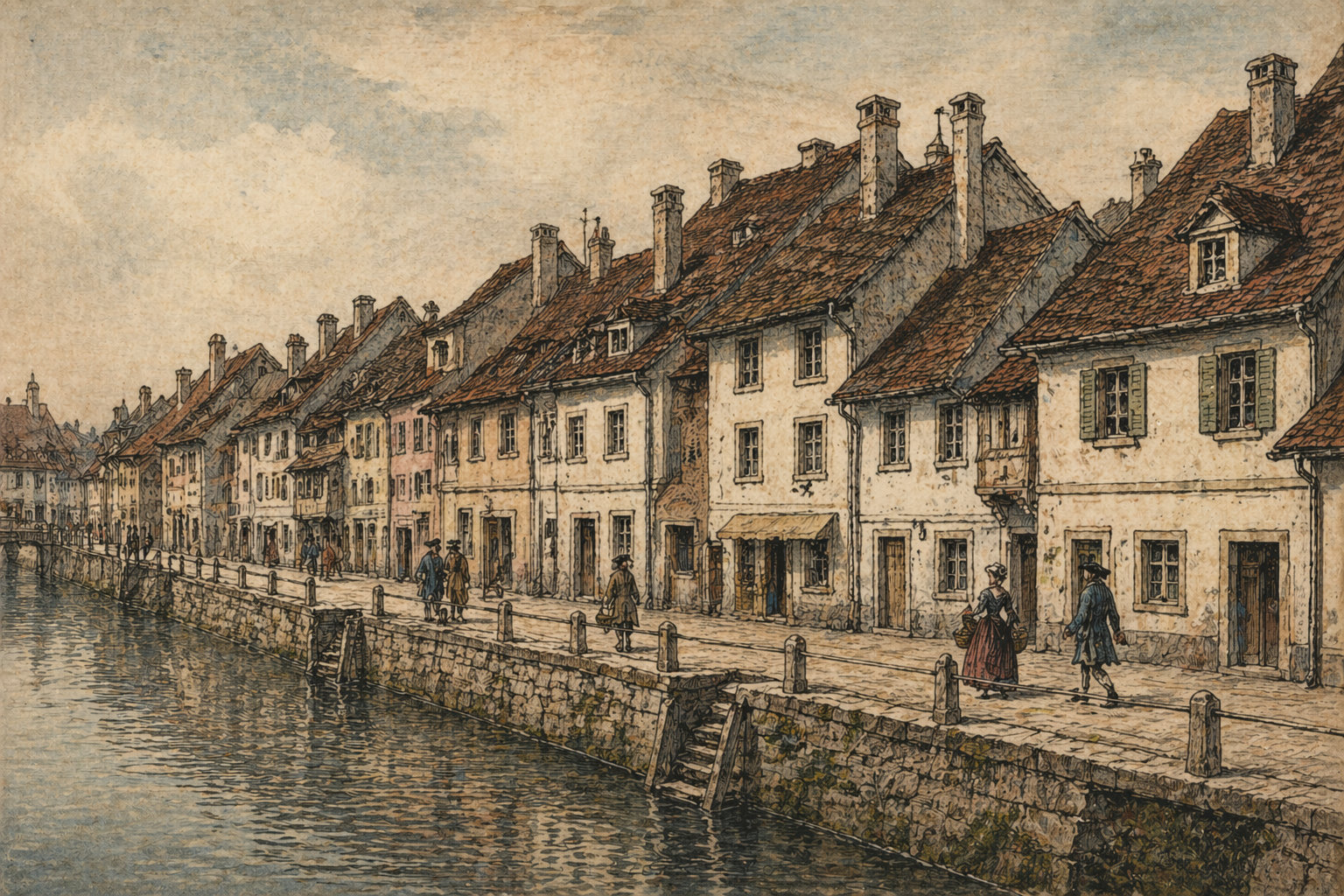
When we think of house names, we usually imagine rural settings—and rightly so, as they have survived there the longest and are still actively used today. However, the phenomenon was not limited to the countryside.
House names also existed in towns. A good example is the 1754 census of Ljubljana, where urban houses were often named after their owners. For instance, a house referred to as Saverischen Haus was associated with a family bearing the surname Saver.
There were also names not directly linked to surnames, such as Hungrischen Haus (“Hungarian House”). In some cases, house names persisted even after the residents changed, which mirrors the typical logic of rural house names. A particularly telling example is Suhadolnig Haus, where the name remained in use even though the surname Suhadolnik was no longer present among the inhabitants in 1754.
The key difference is that in towns such naming practices disappeared relatively early, while in rural areas—especially in more traditional environments—they have survived into the present day.
Where House Names Are Most Common in Slovenia
There is no single map that clearly shows where house names are still in use across Slovenia, so generalizations should be made with caution. However, it is safe to say that they have been—and in many places still are—most prominent in rural areas, especially where the connection between house, land, and family remained stable over generations.
Today, house names are best documented in Upper Carniola (Gorenjska) and parts of central Slovenia. The Slovenian House Names portal includes more than 17,000 recorded names and covers numerous municipalities such as Bled, Bohinj, Cerklje na Gorenjskem, Domžale, Kamnik, Kranj, Škofja Loka, Tržič, and others.
At the same time, practical experience shows the opposite trend as well: in towns, house names have largely disappeared in some parts of Styria, they are less preserved than in Alpine or Dolenjska regions. Understanding this helps researchers set realistic expectations when working with different regions.
My Personal Experience with House Names
In the village in Dolenjska where I was born, house names are still very much alive. People often identify someone by their house name rather than their surname—and sometimes the surname is not used at all. As a child, this used to bother me. Instead of being called by my surname, I was called “Skončjakov Tadej.” At the time, it felt outdated, almost archaic.
Today, I see it very differently. I understand house-based naming as part of family heritage—something meaningful and even a source of pride. My grandparents came from a homestead known as “Pri Skončjaku” (“at Skončjak’s”), because the house stood at the end of the village—literally “at the edge.”
What once seemed strange now feels logical and even endearing. Just like surnames, house names have their own origins, meanings, and memories. Since I no longer live at that homestead, I have also, in a way, lost the “right” to use that designation. Still, from time to time, when I visit, someone will greet me again as “Skončjakov Tadej.”
In my family tree, I encounter many house names that reveal a great deal about the homesteads themselves. One grandfather came from “Pri Pustarju,” referring to “poor” or less fertile land. My grandmother came from “Pri Malnarju,” indicating a mill (maln). Another grandfather came from “Pri Kujerju,” reflecting a tradition of horse trading. My other grandmother came from “Pri Pangercu,” named after a distant ancestor, Pongrac, who established the homestead.
House names therefore reveal many characteristics of our ancestors’ lives and homes—and for me, they represent a true treasure of meanings and origins.
House Names as Cultural Heritage
Today, house names are officially recognized as part of Slovenia’s intangible cultural heritage. Their importance goes beyond nostalgia. They preserve dialect forms, historical memory, local identity, and a sense of belonging.
At the same time, they have very practical value for genealogists: they help us correctly interpret historical records and understand how people actually lived, named each other, and identified one another in everyday life.
Conclusion
A house name may appear as a small note next to a person’s name, but in reality, it often carries far more information than it seems at first glance. It connects a person to a house, a house to a property, a property to a family, and a family to a place.
For this reason, house names are not just an interesting feature of Slovenian rural life—they are one of the most useful keys to understanding Slovenian genealogical records. Once we learn to recognize and interpret them correctly, many genealogical puzzles suddenly fall into place.