
German and Latin Forms of Slovene Given Names: What Was Lost – and What We Can Understand Today
Anyone researching Slovene ancestors encounters the same issue very quickly: in parish registers and other historical sources, personal names are recorded in Latin or German, often in highly standardized and formalized forms. At first glance, it may appear that our ancestors bore foreign names such as Andreas, Mathias, Johannes, or Michael. In reality, however, everyday name usage was often quite different.
This article focuses on a reference list of the most commonly used Slovene given names as they appear in Latin and German sources between the 17th and 19th centuries. The list is presented below in a clear, practical format and is also available as a free PDF download. It is intended as a working aid for reading historical records, not as a definitive answer, but as guidance for interpretation and orientation.
The broader question of whether our ancestors actually spoke German, or primarily encountered it as a written and administrative language, is explored in more detail in an earlier blog post: Did Our Ancestors Really Speak German? Understanding German in Slovenian Genealogy .
Download the reference list (PDF)
The list of Slovene given names and their Latin and German recorded forms (17th–19th century) is available as a free PDF for personal and research use.
Mathias: Matija or Matjaž?
One of the most common dilemmas concerns the name Mathias. This name appears very frequently in historical records, yet in modern Slovene it may correspond to Matija or Matjaž. When working only with parish registers from the 18th or 19th century, it is often impossible to determine the correct form with certainty.
Here, later parish registers from the late 19th and early 20th centuries are extremely helpful. As German gradually gave way to Slovene as the language of official record-keeping, Slovene name forms began to appear for the same individuals, revealing how they were actually called.
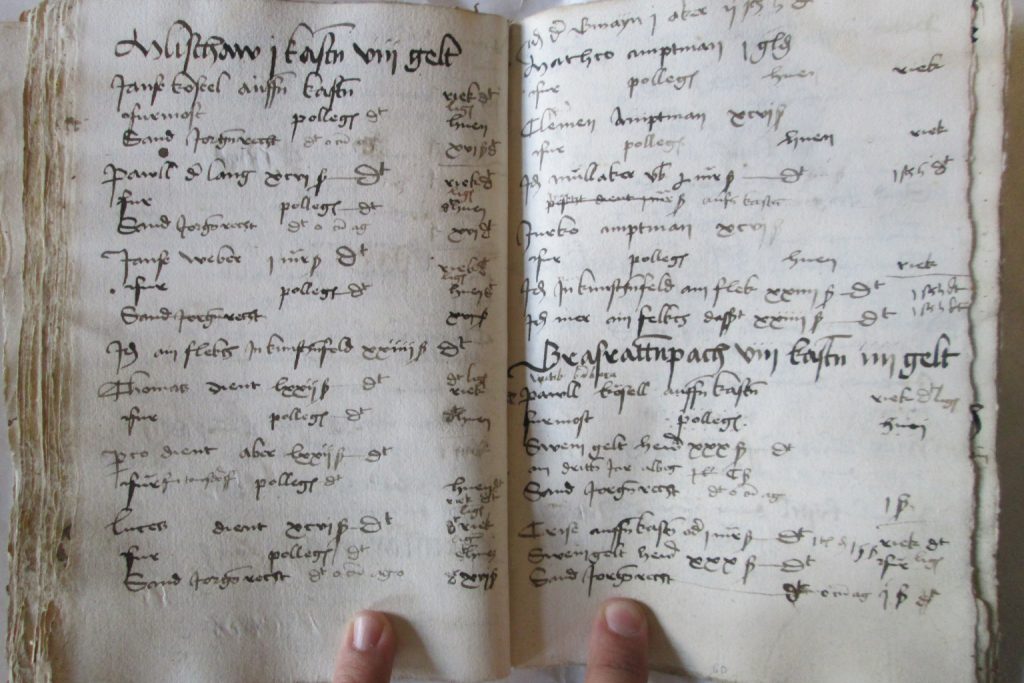
An even clearer picture emerges from earlier administrative sources, especially manorial records (urbars) from the 16th century. In these documents, scribes often recorded names phonetically, following actual usage. As a result, we see clear distinctions:
Matej: Mathey, Matheo
Matevž: Mateus, Matheusch, Matheuß, Matheußch
Matija: Mathia, Mathie
These examples show that such distinctions were meaningful and recognized by contemporaries, even if later church records obscured them.
Johann: Janez or Ivan?
A similar question arises with the name Johannes or Johann. Should it be interpreted as Janez or Ivan? Once again, later parish registers provide valuable insight. By the end of the 19th century, Janez remained the dominant form, while Ivan became increasingly common but did not yet replace it.
Earlier sources reveal even greater variation. In 16th-century records, we find forms such as Janeß, Janse, Jannes, and Janne, which clearly reflect Slovene everyday usage, written phonetically rather than according to formal ecclesiastical standards.
When the formal record is no longer the only one
An especially valuable source for understanding actual name usage are marriage and death registers from the late 19th and early 20th centuries. In these records, brides, grooms, and witnesses are often listed under the names they actually used in daily life, rather than the formal—often German—name recorded at birth.
Several clear trends become visible in this period:
Jožef is frequently recorded as Josip, and Jožefa as Josipina
Miha appears as an independent name, previously concealed under the formal Michael
The same pattern applies to other names: Neža appears in older sources as Nesa, Nescha, or Nesha, rather than Agnes; Franc is recorded as Franze, Franz, or Frannze, not Franciscus; and Miha appears not as Michael, but in numerous vernacular forms such as Michal, Michl, Mihel, and Mihl.
Why manorial and administrative records matter
Because of their formalized nature, parish registers often obscured everyday name usage. Latin and German forms became standardized regardless of how individuals were called in real life.
Manorial records, tax lists, and other administrative documents, however, are often far more direct. Scribes frequently recorded names as they heard them, making these sources invaluable for the study of personal names (onomastics) and for understanding linguistic reality in the Slovene lands.
These records clearly demonstrate that Slovene ancestors did not use “German names” in daily life. Their names were Slovene long before the rise of modern nationalism; they were simply written in the official languages of administration.
In conclusion
The list presented in this article is intended as a practical research tool for interpreting historical sources. It is a living document that will be expanded and refined over time.
Toward the end of the 19th century, during the period of national awakening, long-suppressed or forgotten Slovene name forms also began to reappear in official records—but that is already a topic for another blog post.
Linking Slovene given names with their Latin and German written forms
-
- Adam: Adamus / Adam
- Adolf: Adolfus / Adolf
- Ahac, Ahacij: Achatius / Achatz
- Albert: Albertus / Albert
- Aleš: Alexius / Alex, Alexius
- Alojz: Aloysius / Alois
- Ambrož: Ambrosius / Ambros
- Andrej: Andreas / Andreas, Andrey
- Anton: Antonius / Anton, Anthon
- Anže: Anselmus / Anxe
- Avguštin: Augustinus / Augustin
- Blaž: Blasius / Blas, Blase
- Boltežar: Balthasar / Balthesar
- Bernard: Bernardus / Bernhard, Bernhardt
- Celestin: Caelestinus / Celestin
- Damjan: Damianus / Damian
- Danijel: Daniel / Daniel
- David: David / David
- Dominik: Dominicus / Dominik
- Edvard: Eduardus / Eduard
- Engilbert: Engelbertus / Engelbert
- Erazem: Erasmus / Erasm
- Feliks: Felix / Felix
- Filip: Philippus / Philip, Fillipus
- Florjan: Florianus / Florian
- Franc: Franciscus / Franz
- Fortunat: Fortunatus / Fortunat
- Gabrijel: Gabriel / Gabriel
- Gašper: Casparus / Caspar, Kaspar
- Gregor: Gregorius / Gregor
- Ignac: Ignatius / Ignaz
- Jakob: Jacobus / Jakob
- Janez, Ivan: Joannes / Johann
- Janko: – / Jannckho
- Jernej: Bartholomaeus / Barthol, Bart
- Jožef, Josip: Josephus / Joseph, Josef
- Jurij: Georgius / Georg
- Karel: Carolus / Carl, Karl
- Klemen: Clemens / Clemen, Clement
- Kozma: Cosmas / Cosmas
- Krištof: Christophorus / Christoph, Christoff
- Lambert: Lambertus / Lampret, Lamprecht
- Lenart: Leonardus / Lienhardus, Lienhart
- Leopold: Leopoldus / Leopold
- Lovrenc: Laurentius / Laurenz, Lorenz
- Luka: Lucas / Lukas
- Marko: Marcus / Marco
- Martin: Martinus / Martin
- Matej: Matthaeus / Matthäus
- Matija, Matjaž: Mathias / Mathias
- Mihael: Michael / Michael
- Miklavž, Nikolaj: Nicolaus / Nicolay
- Ožbalt: Oswaldus / Oswald
- Pankracij: Pancratius / Pangraetz
- Pavel: Paulus / Paul
- Peter: Petrus / Peter
- Primož: Primus / Primus
- Rok: Rochus / Rokus, Rocus
- Rupert: Rupertus / Ruprecht
- Simon: Simon / Simon
- Silvester: Silvester / Silvester
- Štefan: Stephanus / Stephan, Steppan
- Tadej: Thaddaeus / Thadeus
- Tomaž: Thomas / Thomas
- Urban: Urbanus / Urban, Vrban
- Ulrik: Ulricus / Vlrich
- Valentin: Valentinus / Valentin
- Vid: Vitus / Vitus
- Viktor: Victor / Victor
- Vincenc: Vincentius / Vincent
- Žiga: Sigismundus / Sigismund, Siegmund
-
- Agata: Agatha / Agatha
- Ana: Anna / Anna
- Anka: – / Anka
- Alojzija: Aloysia / Aloysia
- Antonija: Antonia / Antonia
- Barbara: Barbara / Barbara
- Cecilija: Caecilia / Caecilia
- Celestina: Caelestina / Celestine
- Doroteja: Dorothea / Dorothea
- Elizabeta: Elisabetha / Elisabeth
- Eva: Eva / Eva, Eua
- Frančiška: Francisca / Francisca
- Helena: Helena / Helena
- Ivana: Joanna / Johanna
- Jera, Jedrt: Gertrudis / Gertrud, Gertruda
- Judita: Judith / Judith
- Julija: Julia / Julia
- Katarina: Catharina / Katharina
- Kristina: Christina / Christine
- Lucija: Lucia / Lucia
- Magdalena: Magdalena / Magdalena
- Marija: Maria / Maria
- Marina: Marina / Marina
- Marjana: Mariana / Mariana
- Maruša: – / Marusch
- Marta: Martha / Martha
- Mica: – / Miza
- Mina: – / Minna
- Monika: Monica / Monica
- Neža: Agnes / Agnes
- Rozalija: Rosalia / Rosalia
- Roza: Rosa / Rosa
- Suzana: Susanna / Susana
- Špela: Spela / Spela
- Terezija: Theresia / Theresia
- Uršula: Ursula / Ursula, Vrsula
- Veronika: Veronica / Veronica