
Diphtheria in 19th century Slovenia
When the Children Fell Silent: Diphtheria in Kitni Vrh
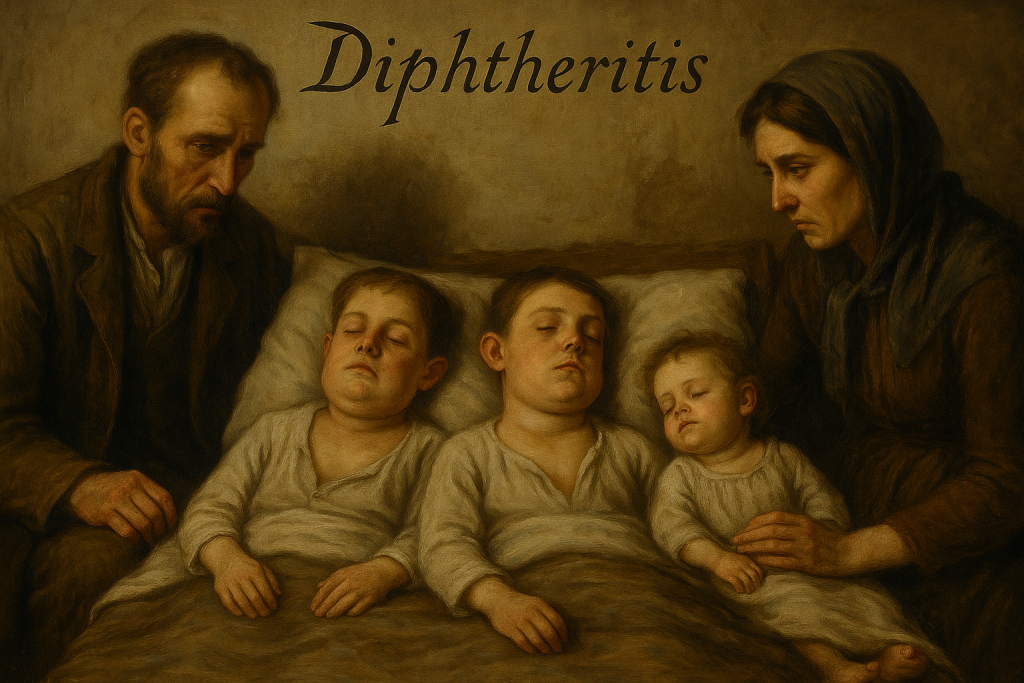
On Christmas Day 1895, the small village of Kitni Vrh in the parish of Zagradec was wrapped in silent tragedy. In a modest cottage known by the field name Kobiljek, lived the family of tenant farmer Anton Zaletel and his wife Marija, née Vidmar. That holiday season, a deadly illness struck their home. On December 25, their four-year-old son France died. The very next day, their eight-year-old son Janez succumbed as well. And on December 27, two-year-old Jožefa, daughter of Anton’s sister Marija Zaletel and stonemason France Miklavčič, also died. They all lived together at house no. 21 in Kitni Vrh. Within just three days, three children had died from a disease recorded in the parish death register as “Diphtheritis,” with the German annotation “Halsschwazen.” Today, we know it as diphtheria.
When Diphtheria Claimed the Youngest
Diphtheria is a severe contagious disease caused by the bacterium Corynebacterium diphtheriae. It primarily affects the mucous membranes of the throat and nose, but sometimes also the skin. A grayish-white membrane forms at the infection site and can spread to the trachea, leading to suffocation. Typical symptoms include sore throat, difficulty breathing, swelling of the neck (hence the old Slovenian term “neck thickening”), and general weakness. The disease is spread through droplets and was particularly deadly for children in the 19th century.
At that time, treatment options were nearly nonexistent. It was not until 1893 that Emil von Behring developed an antitoxin using horse serum, but access to the remedy was rare. In Slovenia, diphtheria deaths declined only after the introduction of mandatory vaccination. The last recorded case in the country was in 1967.
A Household Where Children's Voices Fell Silent
By the end of the 19th century, Anton and Marija Zaletel had lost all of their children. Their tragic story unfolded in three painful waves:
- In 1883: Their newborn daughter Terezija (I) died at just three days old from “božjast” (likely a neonatal infection, tetanus, or epilepsy).
- In 1892: On September 26, eight-year-old Terezija (II) died from dysentery (“Ruhr”), followed by thirteen-year-old Anton, who died of the same cause on October 11.
- In 1895: On December 25, four-year-old France died of diphtheria. His eight-year-old brother Janez died the following day. On December 27, their cousin Jožefa, age two, also died—she lived in the same house with her parents, Marija Zaletel and France Miklavčič.
In total, Anton and Marija Zaletel buried five children. All of them died before the 20th century.
After these tragedies, Marija Zaletel and her husband France Miklavčič continued to live in the same house. Despite losing their daughter Jožefa, they had two more children in the years that followed. However, the Zaletel family name from this branch ultimately died out.

Diphtheria: The Children's Plague of the 19th Century
The case in Kitni Vrh was not unique. In the 19th century, diphtheria was one of the leading causes of childhood death in Europe. Due to its rapid spread, severe symptoms, and the lack of treatment options, it was one of the most feared childhood illnesses. A pattern of consecutive deaths, like in the Zaletel family, was tragically common. Epidemics of diphtheria, measles, scarlet fever, and dysentery frequently ravaged rural communities, where hygiene was poor and medical care was scarce.
Because of such diseases, children’s graves were once a common sight in every cemetery. The death of a child was not an exception—it was part of everyday life.
The story of the Zaletel family is not only a tragic glimpse into the past, but also a stark reminder of how fragile life once was. Today, we are protected by vaccines that many take for granted. But stories like the one from Kitni Vrh remind us how precious those advances truly are—for the health of children, families, and entire communities.