

How Our Ancestors Celebrated Carnival: The History of Carnival Traditions in Slovenia
Today, Carnival in Slovenia is often associated with doughnuts, children’s costumes, and colorful parades. Yet it has much deeper roots. For our ancestors, it marked a transition between winter and spring, between a period of restraint and the beginning of Lent. It was a moment when the community allowed itself greater freedom, laughter, and abundance. To understand how our ancestors celebrated Carnival, we must look beyond modern festivals and ask what it meant in a world shaped by labor, faith, modest living, and only occasional festive highlights.
Carnival as a Turning Point in the Year
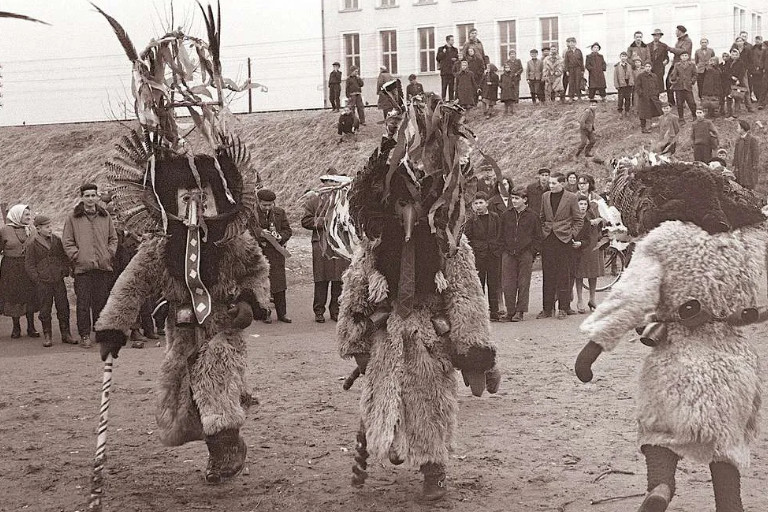
Carnival was positioned just before the Lenten fast and was therefore clearly limited in time. During these few days, masked processions took place, comic scenes were performed, and social roles could briefly be reversed. Through noise, movement, and symbolism, the community symbolically “drove away” winter. Even the 17th-century polymath Janez Vajkard Valvasor described disguises and folk customs in Carniola, confirming that Carnival traditions were deeply embedded in everyday life.
Different Slovenian regions developed their own distinctive forms of masks and processions. Some are internationally recognized today, while others remain more local and less known. Among the most famous are the Carnival celebrations in Ptuj, including the Kurentovanje festival, and the large-scale carnival in Cerknica, both of which attract thousands of visitors each year. At the same time, smaller traditions such as the Zagoriške mačkare or Carnival in Dobrna preserve a strong bond between local communities and their traditional masks.
What these traditions share is that Carnival was never merely entertainment. It was an organized part of village life. Youth groups, associations, or other local collectives had clearly defined roles. The course of events was known, and the characters carried symbolic meaning, representing continuity across generations.
Fat Thursday, Saturday Parades, and Shrove Tuesday
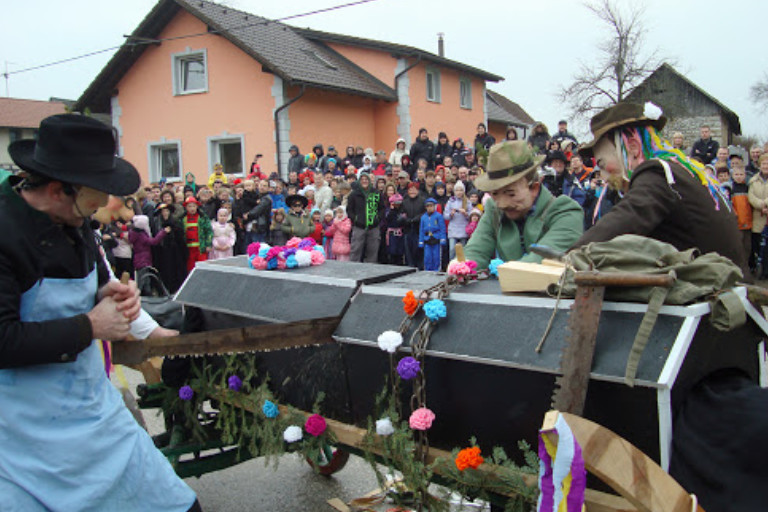
The Carnival season built gradually toward its climax. Fat Thursday marked the beginning of the most intense celebrations. The name itself reveals the importance of rich food. On this day, households prepared hearty dishes, including meat and fried pastries, in anticipation of the upcoming fast. The belief that one should eat well during Carnival was closely connected to hopes for abundance and good fortune in the year ahead.
Carnival Saturday and Sunday were, in many places, dedicated to larger processions and public presentations of masks. Today, more and more smaller towns organize Saturday Carnival parades, where kindergartens, schoolchildren, associations, interest groups, and individuals participate. This practice continues the older tradition of community-based presentation, though it is now often more structured and open to a wider audience.
Shrove Tuesday traditionally represents the climax. It is the final day before Ash Wednesday, when Lent begins. In some places, people symbolically “bury Carnival,” marking the end of merrymaking and a return to order and restraint.
Food and Doughnuts as Symbols of Abundance
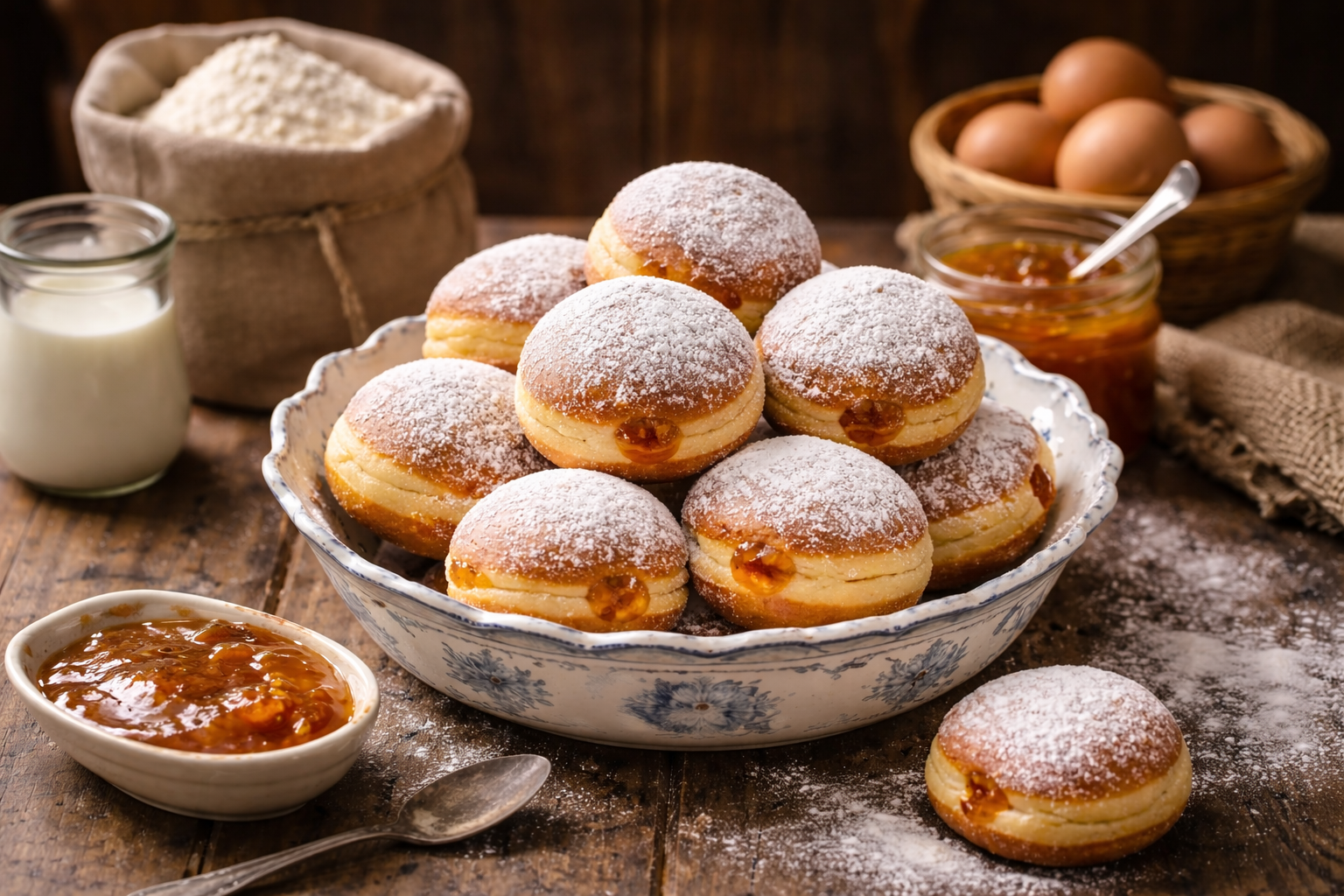
In the world of our ancestors, food was never taken for granted. Daily meals were simple, while meat and sweets were reserved for special occasions. Carnival was one of the rare moments in the year when indulgence was permitted. Doughnuts became the symbol of this abundance. These deep-fried yeast pastries, filled with jam or another sweet filling and dusted with sugar, require fat, flour, and time. They were therefore not everyday food, but a festive exception.
For this reason, the doughnut is not merely a dessert but a symbol of transition between abundance and the restraint that soon followed. Even today, doughnuts remain the central feature of Carnival tables, demonstrating the strong continuity of tradition.
Carnival and Halloween – Two Different Traditions
In recent decades, Halloween has also become present in Slovenia. Originating in the Anglo-Saxon world and connected to the eve of All Saints’ Day, Halloween is based on a different historical background and symbolism, emphasizing spirits, darkness, and the autumnal transition.
Our ancestors did not know Halloween. The autumn season was marked by other religious feasts and customs, not by children dressing up and collecting sweets. Carnival, by contrast, is rooted in the pre-Lenten period and the broader European tradition of carnival celebrations. It belongs to a different moment in the calendar, carries different symbolism, and serves a different social purpose.
Although cultural influences now intermingle, Carnival in Slovenia remains an important traditional holiday. Its strength lies in its ability to connect local communities, foster continuity, and preserve elements that reach far back into the past.
A Personal Memory and Living Continuity
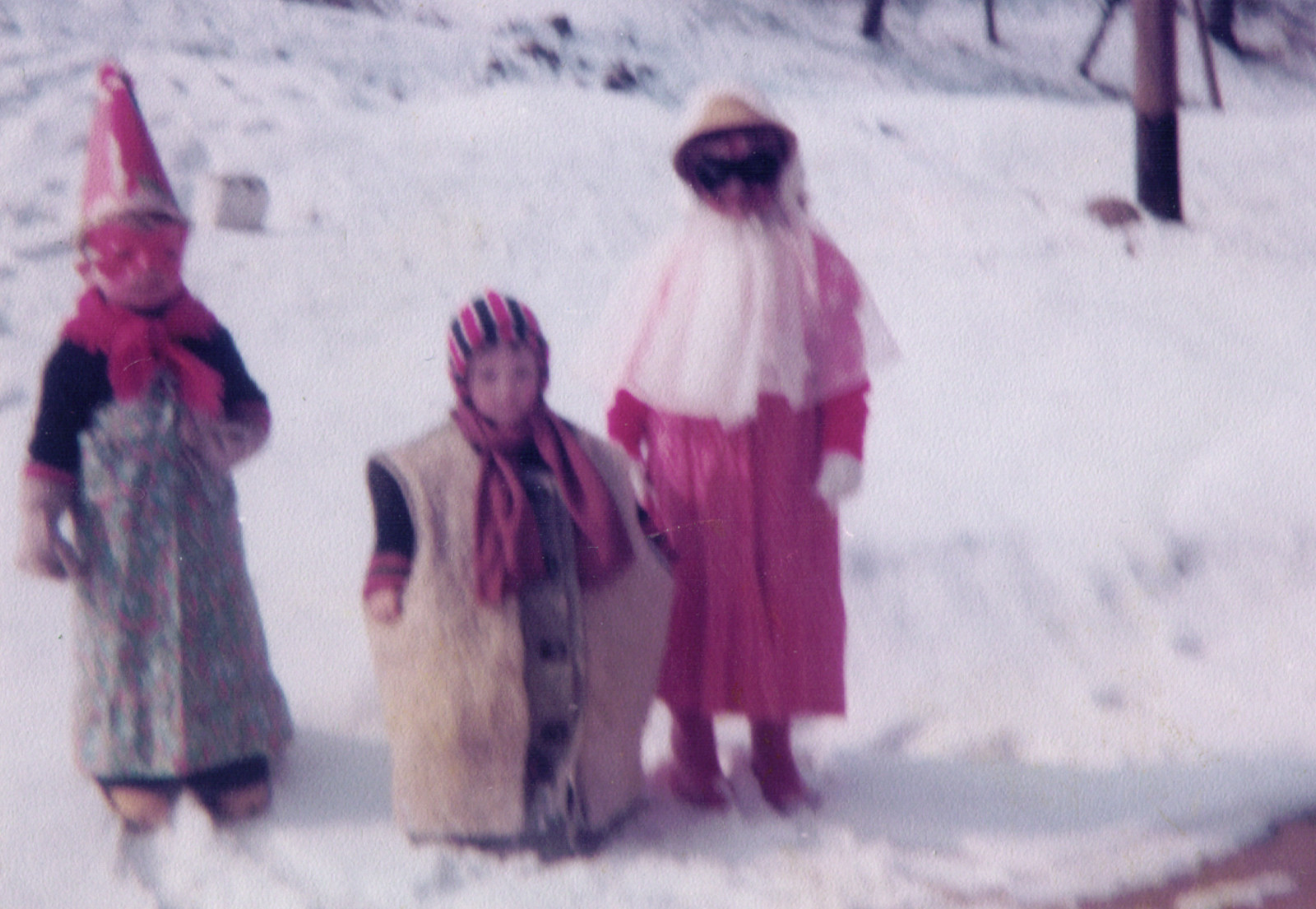
When I think of Carnival, I remember a photograph of myself at two years old, dressed up together with my brother and cousin. At that time, ready-made costumes were not available in stores. Parents would take old clothes from the wardrobe, add a hat, a scarf, or a wooden stick, and we would become shepherds, witches, dwarfs, or the beloved literary hero Kekec. This simplicity was part of the experience. Carnival was not about buying a costume but about imagination and community.
This personal memory is not an exception but part of a long tradition. Carnival was always created at home, in the village, among people. Forms and scale may change, yet the essence remains. Carnival is the moment when a community breathes differently for a few days, laughs at itself, and prepares for a new beginning.
If we wish to understand our ancestors, we must understand their holidays. Carnival is one of those rare moments that still allows us direct contact with their world.