
How Slovenian Ancestors Treated Fresh Wounds Before Modern Medicine
Among the most fascinating sources for understanding everyday life in historical Slovenia are the handwritten folk-healing manuals known as “padarske bukve”. These manuscripts preserved practical medical knowledge used by ordinary rural people at a time when professional doctors were often far away, expensive, or completely inaccessible.
One particularly important tradition of such healing manuals originated with Pavle Lipič, a farmer and folk healer from Bodovlje near Škofja Loka around 1810. Over time, villagers copied these texts by hand and passed them from one generation to another. The manuscript that inspired this short article, “Bukve zdravilstva”, was copied in 1880 by Alojz Brvar from Toplice near Zagorje. It belongs to a wide network of surviving folk-healing books once used across rural Slovenia.
On page 97 of the manuscript appears a short section titled “Za Frišne Rane” (“For Fresh Wounds”). The page offers several simple remedies for treating newly opened wounds — likely cuts and injuries caused by farming, forestry work, tools, or everyday rural labour.
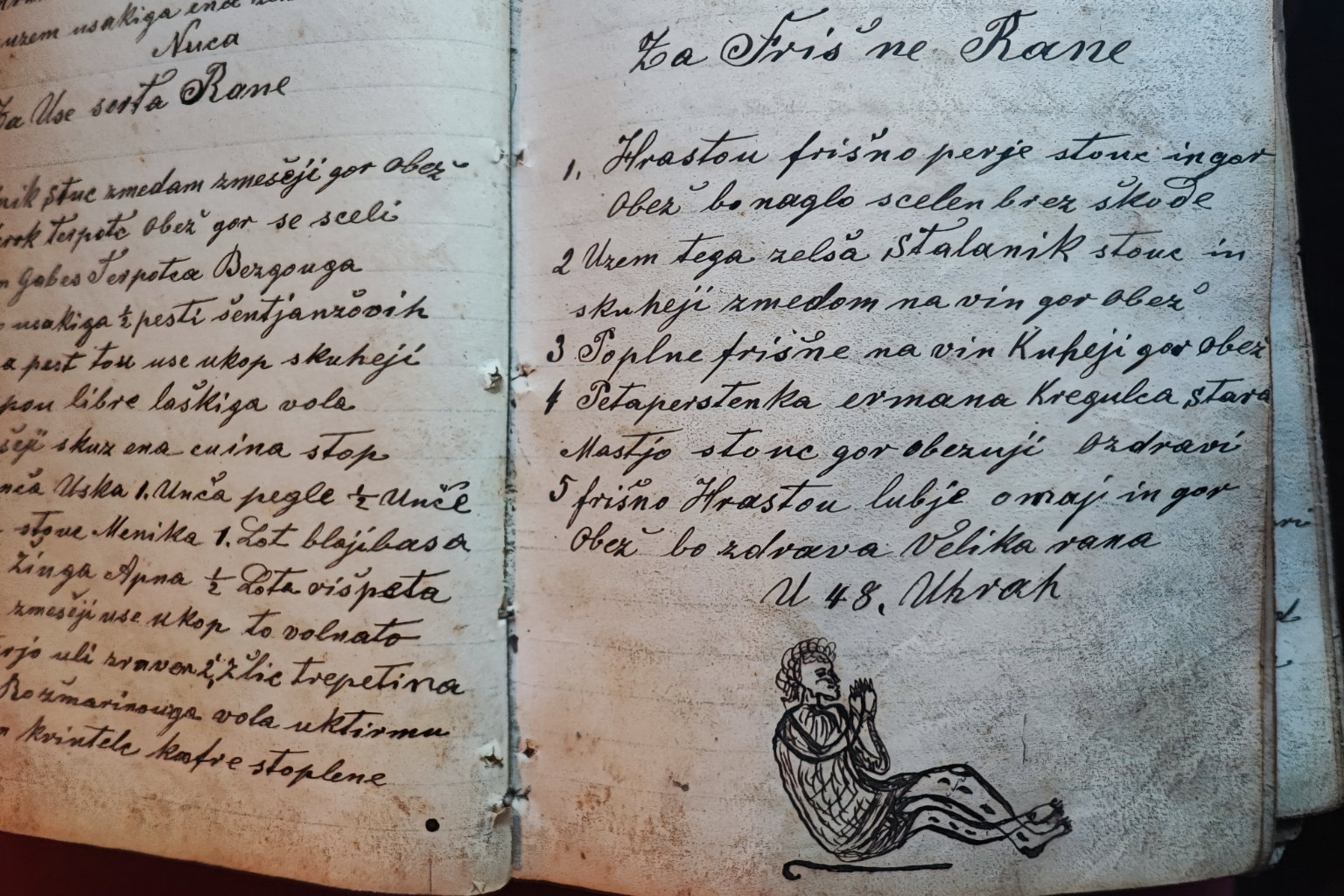
The remedies include:
- Fresh oak leaves crushed into a paste and spread over the wound. According to the manuscript, this would help the injury heal quickly “without harm.”
- The plant slamnik crushed and cooked together with honey and wine, then applied to the wound as a dressing.
- Fresh buds (“poplne” in the manuscript, probably referring to young shoots or buds) boiled in wine and spread over the injured area.
- The fruits of the yellow cinquefoil plant mixed with lard and crushed into an ointment.
- For larger wounds, fresh oak bark placed directly onto the injury.
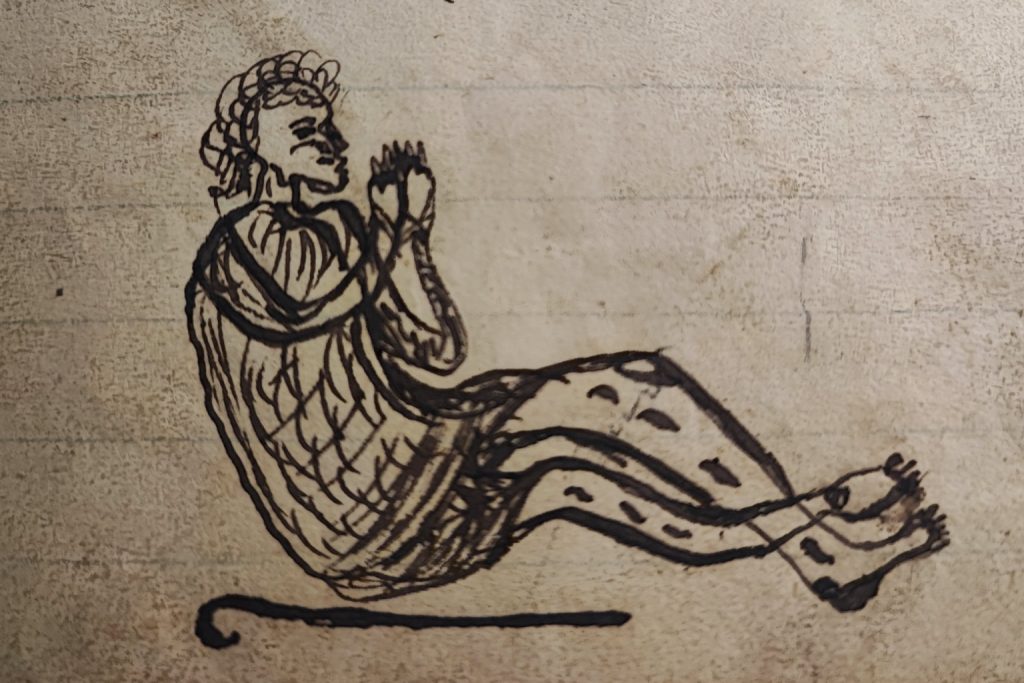
What makes this page especially striking is not only the remedies themselves, but also the emotional illustration beside the text. The manuscript includes an image of a wounded man with injured legs, kneeling in pain and praying for help. The drawing vividly reflects the reality of rural life in the 19th century, when even a relatively ordinary injury could become dangerous or life-threatening.
Today, these treatments belong to the world of historical folk medicine rather than modern healthcare. Yet manuscripts like “Bukve zdravilstva” provide a rare glimpse into how Slovenian ancestors understood the body, nature, suffering, and healing long before modern medicine became widely available.
Fascinating! Thankyou for sharing this information.